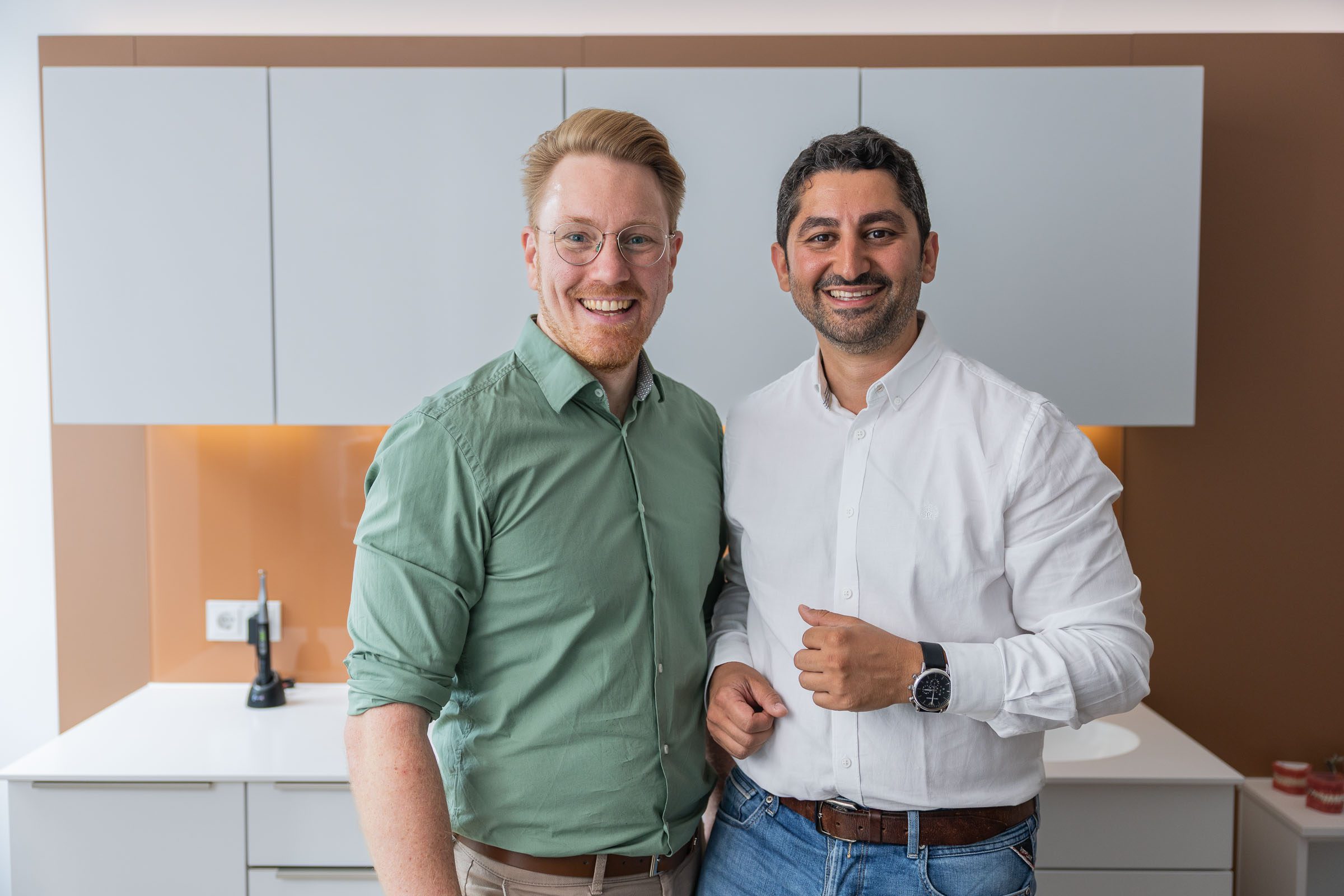
Top Dentist 2027 in Frankfurt, Thanks to Your Reviews
Skyline Orthodontics is a “TOP Dentist 2027.” The F.A.Z. Institute evaluated approximately 55,000 dental practices in Germany for this distinction, and no more than 2,000 received the award. We are among them, a good two years after opening our practice in Frankfurt’s Europaviertel. The list was published on October 14, 2026, in the F.A.Z. and online. It is based primarily on reviews from our patients.
That is why our first thanks go to you: Thank you for your trust and for sharing your experiences.
In this post, we’ll show you what hurdles a practice must overcome to be named “TOP Dentist 2027” and what Skyline is doing right in this regard. We’ll also provide insight into how we work and answer the question of how to recognize a good orthodontist in Frankfurt.
Table of Contents
- What is the "TOP Dentist 2027" award?
- What the award says about Skyline Orthodontics
- Here's how Skyline made it onto the TOP Dentist 2027 list
- How can I tell if an orthodontist is good?
- What Sets Skyline Orthodontics Apart
- When is it a good idea to switch orthodontists or get a second opinion?
- Schedule an appointment in the Europaviertel
- Frequently Asked Questions About TOP Dentist 2027
What is the "TOP Dentist 2027" award?
In a nutshell: "TOP Dentist 2027" recognizes dental practices with which patients are particularly satisfied.
The F.A.Z. Institute compiled the list in collaboration with QuantiQuest Research & Consulting. This is the first year the survey has been conducted. The results were published on October 14, 2026, in the print edition of the F.A.Z. and online at topzahnarzt.faz.net. Skyline Kieferorthopädie, with our practice located on Europa-Allee in 60327 Frankfurt am Main, is one of the practices recognized in the list.
The list appears as a special supplement and is identified as a special advertising publication of the F.A.Z. Institute. According to the institute, inclusion is determined solely by the data research, not by the subsequent licensing of the seal of approval.
Get to know Skyline Orthodontics in person
What the award says about Skyline Orthodontics
The survey evaluates how patients experience a practice in four areas: perceived quality of care, friendliness and empathy, service, and overall satisfaction. In the overall ranking, Skyline Orthodontics scored at least 95 out of 100 points. For us, this means that explaining things on an equal footing, a compassionate team, and well-organized processes resonate with you.
For context: The survey is based on patient reviews and information provided by the medical practices themselves. According to the F.A.Z. Institute, it does not include an objective assessment of the quality of medical care.
For us, being named “TOP Dentist 2027” is both a validation and an incentive: We want you to continue to understand what’s happening and why.
“As a team, we’re very pleased that our patients have given us this rating after a little over two years. This recognition belongs to everyone here who organizes appointments, provides explanations, and supports patients every day.”
— Dr. Dominik Krüger, orthodontist and physical therapist at Skyline Orthodontics
Here's how Skyline made it onto the TOP Dentist 2027 list
For the “TOP Dentist 2027” award, the F.A.Z. Institute evaluates each practice in four steps. Skyline Orthodontics has met all four criteria:
| Step | What happens | Key figure |
|---|---|---|
| 1. Data Base | Medical practices are researched through online directories such as Google Business Profile and preselected based on their reviews | About 55,000 medical practices, of which about 17,000 have at least 20 reviews and a rating of at least 4.5 out of 5 stars |
| 2. Analysis | A trained language model rates the tone of patient reviews on a scale from 1 to 5. It distinguishes between four categories: perceived quality of care, friendliness and empathy, service, and overall satisfaction. | About 700,000 reviews with about 6.3 million text snippets, with each category accounting for 25% |
| 3. Total Score | The score is 80% based on the four categories and 20% based on the average Google star rating | Ranking of the practices surveyed |
| 4. Award | The practice must rank among the top 2,000 and score at least 95 out of 100 points. All of its information must be verified. | Rank 1 through 2,000, at least 95 out of 100 points |
More recent reviews carry more weight than older ones, and verifiers check the information provided by the practices against public sources. For a young practice like ours, this is challenging: Since our founding in July 2024, enough patients have had to be satisfied enough to leave us a review—and a very good one at that. We owe our success in completing all four steps to three things: We take the time to explain things, we recommend only what the test results call for, and our team ensures that appointments and procedures run smoothly.
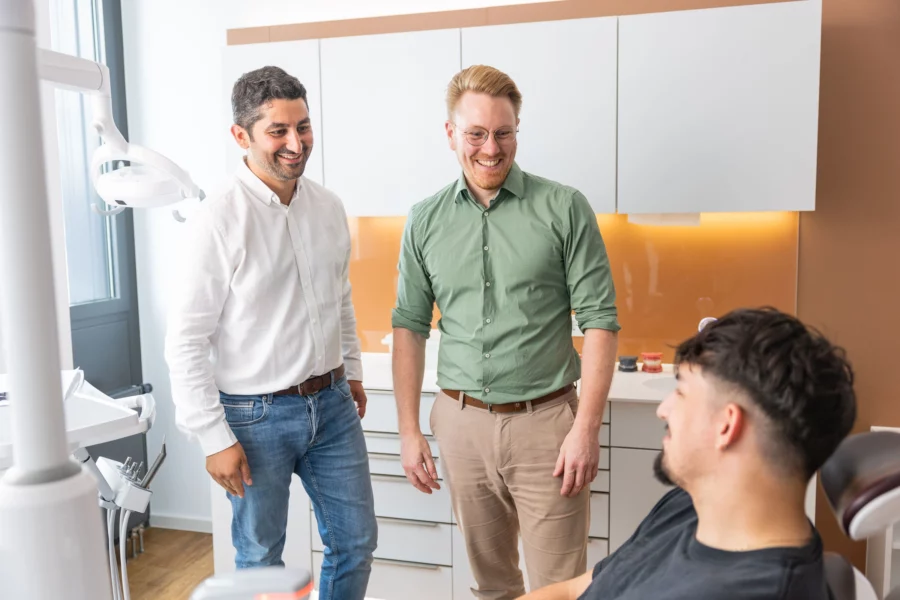
How can I tell if an orthodontist is good?
A good orthodontist in Frankfurt can be recognized by specific qualities. These six points serve as a guide, and here’s how we put them into practice at Skyline Orthodontics:
- Comprehensive Diagnostics: At our practice, every treatment plan begins with a 3D scan, supplemented as needed by digital X-rays and a functional evaluation of the bite and temporomandibular joint.
- Clear, honest advice: We’ll show you the findings using a digital model, explain your options, and let you know if treatment isn’t necessary yet.
- Transparent Costs: Before treatment begins, you will receive a written plan showing what your insurance covers and what is optional.
- Orthodontists: Dr. Krüger and PD Dr. Sayahpour are both orthodontists who have completed several years of advanced training.
- Aftercare and Retention: Retainers and regular checkups help maintain the results.
- Reading reviews in context: Many recent and consistently positive reviews say more than individual opinions. That’s exactly what TOP Zahnarzt 2027 analyzed for us.
A recommendation from friends, family, or your family dentist is often the first step. During your initial consultation, you can check these six points for yourself.
What Sets Skyline Orthodontics Apart
In July 2024, Dr. Dominik Krüger and PD Dr. Babak Sayahpour founded Skyline Orthodontics to combine scientific expertise and personalized care in a single practice as orthodontists in Frankfurt. A little over two years later, the “TOP Dentist 2027” award confirms that this approach resonates with patients. Our practice is located on Europa-Allee, right next to Skyline Plaza and near the Frankfurt Trade Fair. We treat children, adolescents, and adults—including those with public health insurance as well as private patients and self-pay patients.
One principle has guided our work from day one: as much as necessary, as little as possible. Before treatment begins, you’ll receive a written plan outlining what’s covered by insurance and what’s optional. After active treatment, retainers help maintain the results. You can find an overview of all our treatments on our pages for children and teens and for adults.
Dr. Krüger is a specialist in orthodontics and a state-certified physical therapist. He has completed advanced training in craniomandibular dysfunction (CMD). In his doctoral dissertation, he investigated the connections between bite and posture. He brings this holistic perspective to functional diagnostics. To learn how we treat temporomandibular joint pain, visit our page on CMD treatment for adults and read our article on the most common mistakes made when dealing with jaw pain.
PD Dr. Sayahpour is a specialist in orthodontics and an internationally recognized expert on aligners. His postdoctoral thesis focuses on the properties of aligner materials. He received the Align Technology Research Award in 2023 and 2026 for his research. You can read more about this on our page about aligner therapy with Invisalign and in our article about the award for aligner research.
A fully digital workflow connects these two areas of focus. The 3D intraoral scanner replaces traditional impressions, planning is done digitally, and models and splints are produced using 3D printing. Digital X-ray technology provides precise diagnostic results.
“We combine the latest research with plenty of time for each individual patient. The fact that this is exactly what comes across in the reviews is the greatest validation for us.”
— PD Dr. Babak Sayahpour, aligner expert at Skyline Orthodontics
When is it a good idea to switch orthodontists or get a second opinion?
Sometimes, after a consultation or in the middle of treatment, a question remains unanswered. In such cases, it may make sense to switch orthodontists or seek a second opinion. One reason might be that you still have questions about your treatment plan or would like an additional assessment. A second professional opinion can also be helpful before making a major decision. And if you’re new to Frankfurt—for example, moving to the Gallusviertel or Bockenheim neighborhoods—you can continue your treatment with us.

Seeking a second opinion is not a criticism of your current provider. It gives you peace of mind before you make a decision. We take the time to do this and will tell you honestly what we think is best. Sometimes that means the current treatment plan is fine.
If you'd like a second opinion, please bring whatever you have with you to the appointment:
- the treatment and cost plan to date
- existing X-rays and images
- Your previous braces or aligners
We'll explain right from the start what switching health insurance plans means for you and how much it will cost. We'll provide specific figures only after the examination.
Looking for a second opinion? We'd be happy to advise you.
Schedule an appointment in the Europaviertel
Please bring your questions to your first appointment. We'll examine your teeth, jaws, and bite and explain your options. Afterward, you can take your time to decide how to proceed.
You’ll find our orthodontic practice in Frankfurt at Europa-Allee 54, right in the heart of the Europaviertel and close to downtown Frankfurt. The Skyline Plaza is right next door, and the Messe Frankfurt is nearby. The practice is also easily accessible from the main train station.
Take the S-Bahn to the Frankfurt (Main) Messe station, where lines S3, S4, S5, and S6 stop. From there, it’s about a five-minute walk. Bus line M46 and tram lines 11, 14, and 21 (Güterplatz and Galluswarte stops) will also take you close to us. You can easily reach us by public transportation from Seckbach, Riederwald, and Fechenheim, and it’s not far from the neighboring Gutleutviertel district. Drivers can park in the Skyline Plaza parking garage.
You can reach us Monday through Thursday from 8 a.m. to 7 p.m. and on Fridays from 8 a.m. to 2 p.m. You can schedule an appointment by calling 069 48002777 or using our online form. We look forward to speaking with you, whether you found us through TOP Zahnarzt 2027 or by referral.
About the Authors

Dr. Dominik Krüger
Specialist in Orthodontics and State-Certified Physical Therapist at Skyline Orthodontics
Dr. Dominik Krüger worked as an orthodontist in established practices for several years before founding Skyline Orthodontics in Frankfurt’s Europaviertel in July 2024, together with PD Dr. Babak Sayahpour. As a state-certified physical therapist with additional training in craniomandibular dysfunction and a doctoral dissertation on the connections between bite and posture, he combines orthodontics with a functional approach to the entire body. When treating children, he therefore pays attention not only to their teeth but also to their breathing, swallowing, and posture. He is present at the practice every day.
PD Dr. Babak Sayahpour
Specialist in Orthodontics · Private Lecturer at Goethe University Frankfurt · Co-founder of Skyline Orthodontics
PD Dr. Babak Sayahpour is a specialist in orthodontics at Skyline Orthodontics in Frankfurt’s Europaviertel and a Privatdozent at Goethe University Frankfurt. He completed his habilitation thesis on the properties of aligner materials and was awarded the Align Technology Research Award in 2023 and 2026. He regularly shares his expertise at national and international professional conferences.
Frequently Asked Questions About TOP Dentist 2027
-

Top Dentist 2027 in Frankfurt, Thanks to Your Reviews
Skyline Orthodontics is a TOP Dentist for 2027. The F.A.Z. Institute evaluated approximately 55,000 dental practices in Germany for this distinction, and no more than 2,000 received the award. We are among them, a good two years after opening our practice in Frankfurt’s Europaviertel. The list was published on October 14, 2026, in the F.A.Z. and online. It is based primarily on…
-
When Should a Child Get Braces? 7 Myths That Parents in Frankfurt Still Believe
Many parents often find themselves suddenly wondering when it makes sense to get braces. It usually starts with something small: the first permanent incisors are slightly crooked, a tooth is pushing its way into the second row, or the dentist casually mentions the bite during a checkup. Shortly after, the well-meaning advice starts coming in. At the playground, people say,…
-
The 7 Biggest Mistakes in Treating Jaw Pain
Jaw pain is one of the most commonly misdiagnosed conditions. Many adults who come to our practice in the Europaviertel district of Frankfurt am Main with pain in their temporomandibular joint have a long history of treatment behind them: appointments with dentists, ear, nose, and throat specialists, neurologists, and physical therapists. Often, they have several mouthguards sitting in a drawer that haven’t made a difference or…
-
Skyline Orthodontics Honored Once Again for Invisalign Research
For me, orthodontic treatment with aligners—especially Invisalign aligners—is more than just part of my daily practice; it’s also one of my main areas of research. My name is Privatdozent (PD) Dr. Babak Sayahpour; I’m an orthodontist in Frankfurt am Main and treat patients at Skyline Orthodontics in the Europaviertel. I’m all the more pleased that in 2026, for the second time, after…
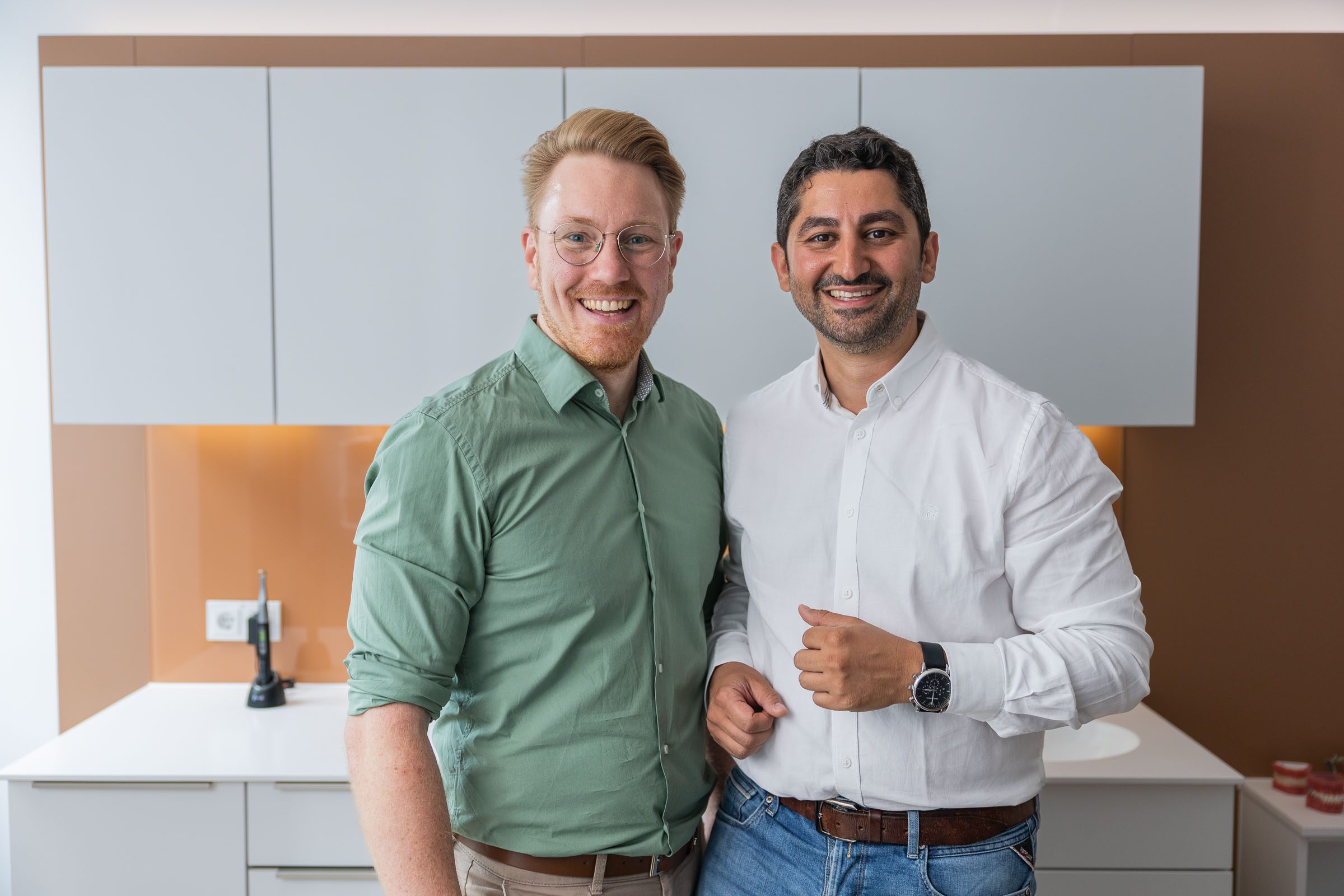
Your dream smile is our goal. For a result that will bring you joy for years to come.
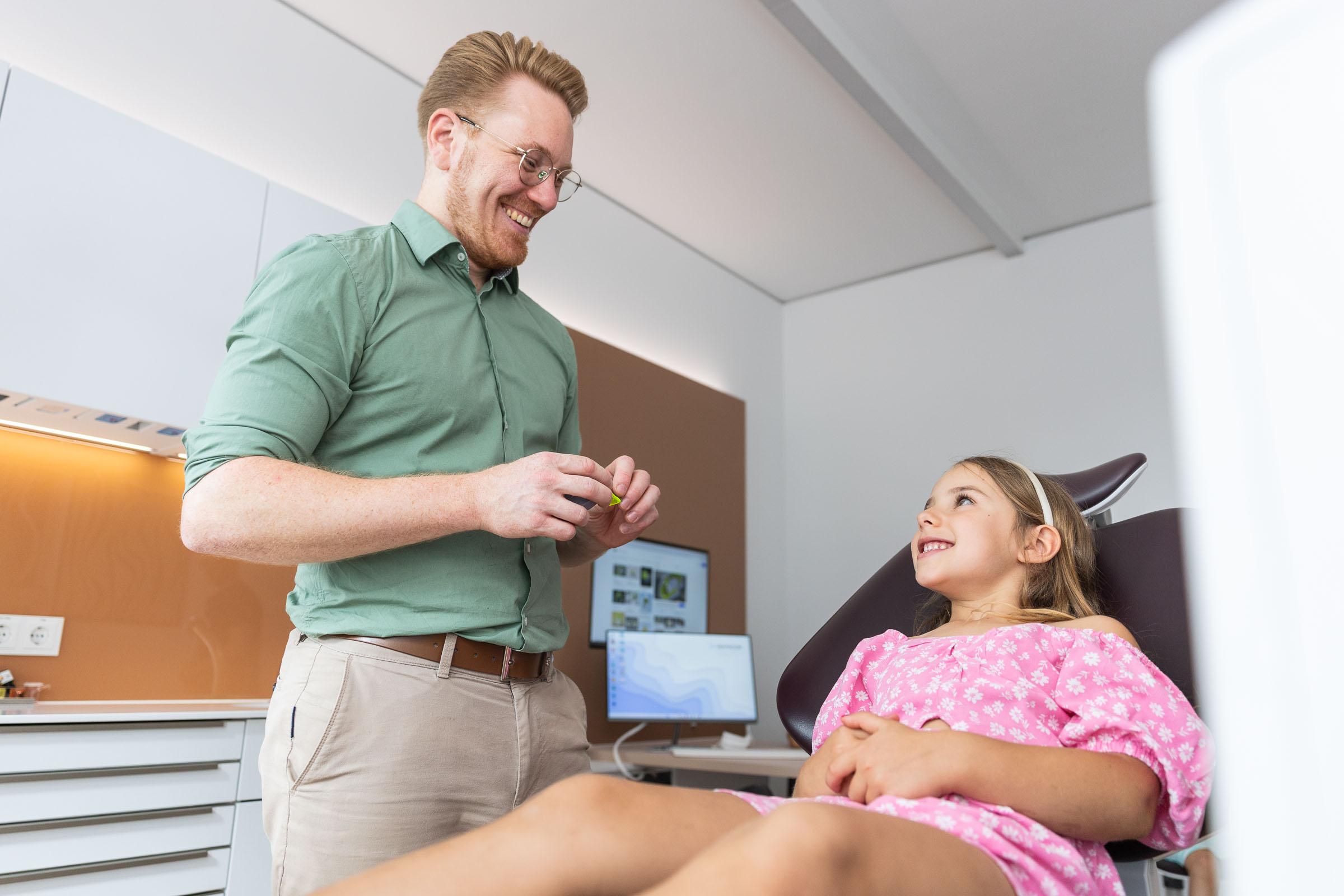
When Should a Child Get Braces? 7 Myths That Parents in Frankfurt Still Believe
Many parents often find themselves suddenly wondering when it makes sense to get braces. It usually starts with something small: the first permanent incisors are slightly crooked, a tooth is pushing its way into the second row, or the dentist casually mentions the bite during a checkup. Shortly after, the well-meaning advice starts coming in. At the playground, people say it’ll sort itself out; in the family, they say there’s no point in doing anything before age twelve anyway. Both sound reasonable. Neither is entirely true.
As your orthodontist in Frankfurt am Main, located right on Europa-Allee in the Europaviertel, we see every week just how much these rules of thumb unsettle parents. Yet it’s actually quite clear when it makes sense to start wearing braces—if you know what matters. That’s why we’re addressing the seven myths we encounter most frequently during consultations and explaining what the science has to say about them.
Table of Contents
- When Should a Child Get Braces? The Short Answer
- Myth 1: When should you get braces—only after your baby teeth fall out?
- Myth 2: The earlier you get braces, the better?
- Myth 3: Do baby teeth grow together? When is the right time to start wearing braces?
- Myth 4: No Problems, No Braces?
- Myth 5: Is 12 Too Late? When Is the Best Time to Get Braces?
- Myth 6: Health insurance doesn't cover braces?
- Myth 7: When Should You See an Orthodontist—Only With a Referral?
- Your Orthodontist in Frankfurt
- When Should a Child Start Wearing Braces? Frequently Asked Questions
When Should a Child Get Braces? The Short Answer
When do you need braces? This question cannot be answered with a specific age. There is no set age at which every child needs braces. The timing is determined by the diagnosis and the child’s growth. The early mixed dentition phase—roughly between the ages of seven and nine—has proven to be a good time for an initial checkup with an orthodontist. For certain malocclusions, early treatment can begin as early as four or five. Traditional fixed braces are usually applied between the ages of ten and fourteen. So if you want to know when the right time is for your child, an examination is essential. As orthodontists in Frankfurt, we therefore never make blanket decisions about when braces or early treatment are appropriate. The myths below explain why.
When Is It a Good Idea to Get Braces?—Let's Take a Look
Myth 1: When Should Braces Be Fitted for Crossbites and Other Issues? Not Just After the Permanent Teeth Come In
The idea that one must wait until all baby teeth have fallen out is a persistent one. It holds true for many treatments. For some malocclusions, however, it poses a risk: the teeth do not grow together properly, but can instead inhibit growth and negatively affect the development of the jaws.
The most well-known example is a crossbite. In this condition, individual upper molars overlap the lower ones on the inside rather than the outside. To be able to bite down anyway, the child pushes the lower jaw to the side, and over time, the jaw may grow asymmetrically. The situation is similar with a reverse overbite, in which the lower incisors protrude in front of the upper ones. In such cases, the question “When should braces be started?” arises much earlier.
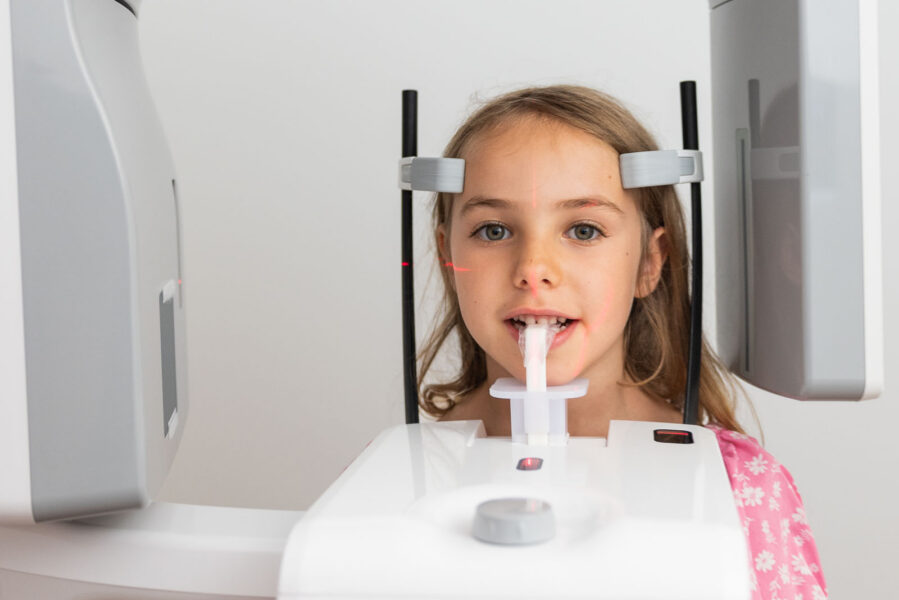
Early treatment during the primary dentition or early mixed dentition phase promotes and guides growth. It resolves growth restrictions so that the jaws can develop unimpeded, since part of jaw growth does not begin until later. For patients with public health insurance, early treatment is limited to a maximum of six quarters, or one and a half years. That’s why we often see children with crossbites at our Frankfurt practice as early as preschool age. The age at which braces become necessary therefore depends on the diagnosis and not on the calendar. Even among siblings, the assessment of when braces become necessary often varies greatly.
Myth 2: “The Earlier, the Better” – When Braces Really Make Sense
Based on Myth 1, some parents draw the opposite conclusion: “Then let’s just do it as early as possible.” But this, too, does not hold up to close scrutiny. A comprehensive Cochrane review evaluated studies on children with protruding upper incisors. Early treatment primarily reduced the risk of injuring the front teeth in a fall. However, in terms of the final outcome, it showed no clear advantage over treatment during adolescence.
Early orthodontic treatment is therefore appropriate when it solves a specific problem. Without this benefit, it mainly just prolongs the time your child has to wear braces.
“Braces are never routine for us. We provide treatment when the diagnosis calls for it, not simply because a child has reached a certain age. Sometimes the best recommendation is to check again in a year.”
— Dr. Dominik Krüger, specialist in orthodontics and physical therapist
This principle guides every treatment at Skyline Orthodontics in Frankfurt’s Europaviertel: as much as necessary, as little as possible. Based on the findings, we’ll explain clearly why—and when—braces might be appropriate for your child.
Myth 3: When Should You Start Wearing Braces on Baby Teeth? Why Don't They Just Grow Out on Their Own?
Some of the abnormalities in baby teeth do, in fact, resolve on their own. Gaps between baby teeth are actually a good sign, because the permanent incisors are wider and need the space. Other abnormalities persist or become more noticeable over the years.
Many families from Bockenheim, Gallus, or the Gutleutviertel come to us with exactly this uncertainty. A few signs can help you determine whether it’s worth consulting a dental specialist:
- The upper incisors protrude far beyond the lower ones.
- The lower incisors overlap the upper ones.
- The lower jaw slips to the side when I bite down.
- When biting down, there is a gap at the front (open bite).
- Your child still regularly sucks on their thumb or pacifier at age five or six.
- A baby tooth was lost very early on, perhaps due to tooth decay or a fall.
- You feel like your child isn't getting enough air through their nose.
- Your child snores at night or grinds their teeth loudly.
- Your child is complaining of trouble biting or chewing.
- Your child speaks unclearly.
If any of these apply, we’ll conduct an examination to determine when braces might be an option for baby teeth. At this stage, a removable set of braces—which is worn primarily at night—is often sufficient for children.
Myth 4: No Pain, No Need to Take Action? What Parents Should Still Be Aware Of
Malocclusions rarely cause pain in children, because children are very adaptable. That’s why they’re often only noticed when someone looks closely. Yet a malocclusion affects more than just a child’s smile: it impacts chewing, speech, and the strain on the temporomandibular joints. If left untreated, malocclusions can cause significant problems later in life, when the body is less resilient and adaptable.
Dr. Dominik Krüger is a specialist in orthodontics and also a state-certified physical therapist. In his doctoral dissertation, he investigated the relationship between bite and posture. This combination is rare in orthodontics and shapes the way we examine children.
“I never just look inside a child’s mouth. The way a child breathes, swallows, and sits often tells me more about their bite than the teeth alone.”
— Dr. Dominik Krüger, specialist in orthodontics and physical therapist
Parents should take note if their child breathes primarily through the mouth, audibly grinds their teeth at night, has difficulty pronouncing certain sounds, or if their jaw clicks while chewing. None of these signs automatically means braces are needed. Together, however, they paint a picture that we evaluate—if necessary—in collaboration with speech-language pathologists, osteopaths, and pediatricians. Only then do we decide whether braces, a splint, or complementary therapy would be helpful, and when to start treatment. Our article on jaw pain and CMD explains how jaw problems develop and what mistakes are commonly made in their treatment.
Myth 5: Is 12 Too Late? When Is the Best Time to Get Fixed Braces?
Many parents come to our office on Europa-Allee feeling guilty because they think they’ve missed the right moment. In most cases, the opposite is true. The late mixed dentition phase is considered particularly favorable for fixed braces: the last permanent teeth are coming in, and the growth spurt of puberty works in our favor.
At what age do children get fixed braces? Usually between the ages of ten and fourteen; girls often start a little earlier than boys because their growth spurt begins sooner. We determine whether braces are appropriate for your child—or whether targeted preliminary treatment with other devices is needed first—by assessing their tooth replacement and growth. How long children need to wear fixed braces depends on their initial condition. Active treatment often lasts one and a half to two and a half years, after which a retainer keeps the teeth in place. Families have a choice when it comes to braces.
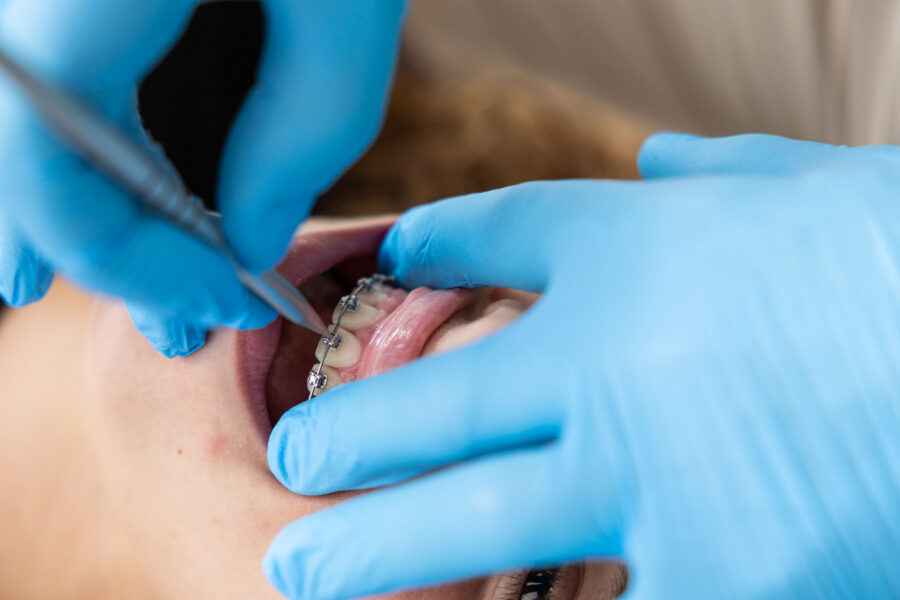
Among other things, we use high-quality, self-ligating brackets that do not require rubber bands and move the teeth using gentle forces. Tooth-colored ceramic brackets are barely noticeable during the school day. Traditional metal brackets are durable and have been tried and tested for decades.
Do children with fixed braces experience pain? After the braces are fitted and after adjustments, children usually feel some pressure for a few days, especially when chewing. Eating soft foods helps during this time, and after that, most children quickly get used to their braces. We explain the process, different types, and care in detail on our page about fixed braces for children.
By the way, there’s no upper age limit. Teeth can be moved at any age, which is why, as your orthodontist in Frankfurt, we treat children, teenagers, and adults of all ages. Our oldest patient was 78 years old.
When Is It a Good Idea to Get Braces?—Let's Take a Look
Myth 6: “Health insurance won’t cover it anyway” – when health insurance covers braces
For children and adolescents, statutory health insurance plans cover treatment if it begins before their 18th birthday and the malocclusion is severe enough. This is assessed using the orthodontic indication groups (KIG for short), which distinguish between five levels of severity. The insurance plan covers treatment starting at Level 3. The National Association of Statutory Health Insurance Dentists explains the procedure in detail.
Even in adulthood, health insurance covers treatment if there is a severe malocclusion. In such cases, a combined orthodontic and oral surgery treatment plan is recommended to restore chewing function and proper bite alignment. We are happy to treat these complex cases at our practice in the Europaviertel. To do so, we work closely with one of Germany’s most experienced oral surgery practices, located right here in the Rhine-Main region.
Parents initially pay the copayment themselves. Once treatment is successfully completed, they will be reimbursed by their health insurance provider. During the examination, we will determine whether your child’s treatment is covered by insurance and explain the KIG classification to you in detail.
The final cost of fixed braces for children depends on the diagnosis and the type of treatment. Some additional services, such as particularly discreet brackets or more modern techniques, are optional. They can significantly reduce the risks and side effects of treatment and make it noticeably more comfortable. Before treatment begins, you will therefore receive a written treatment plan detailing what is covered by insurance and what is optional. We provide equally detailed counseling to privately insured patients and self-pay patients at our practice near the Frankfurt Trade Fair.
Myth 7: When Should You See an Orthodontist? You Don't Need a Referral Right Now
Many parents wait until their family dentist refers them. That is not necessary at this time. Even those with public health insurance can schedule an appointment directly with an orthodontist.
When Should You See an Orthodontist? It’s a good idea to have your first checkup no later than the early mixed dentition stage—around ages seven to nine. If you have a crossbite or a reverse overbite, you should see an orthodontist even earlier. An early appointment doesn’t mean treatment will begin right away. As an orthodontist in Frankfurt am Main, near Skyline Plaza, we make a point of taking our time during this initial checkup so that you’ll know exactly when braces might become an option for your child.
“A simple way to remember when to schedule an appointment with an orthodontist is to think of your child’s first day of school and the transition to middle school. Between the ages of five and seven or ten and twelve, we’re best able to assess whether treatment is needed and when the best time is to begin treatment. We also explain any potential functional limitations and, if necessary, refer you to other specialists, such as speech-language pathologists or occupational therapists.”
— Dr. Dominik Krüger, specialist in orthodontics and physical therapist
Whether it's for starting school or changing schools: After the initial checkup, you'll know if and when braces or early treatment would be a good idea for your child.
When Should You Get Braces? Your Orthodontist in Frankfurt Will Take a Close Look
Early treatment, removable or fixed braces: We can only determine the right time through a thorough diagnosis. Your orthodontist in Frankfurt, located in the heart of the Europaviertel, combines a scientific approach with plenty of patience for children and their questions. As a general guideline: An initial checkup around age six provides clarity, even if no treatment is needed yet.
At Skyline Orthodontics, an unpleasant dental impression is replaced by a 3D scanner, and digital X-ray technology provides precise diagnostic results with minimal radiation exposure. Dr. Dominik Krüger brings his expertise in physical therapy to every examination, and when breathing, tongue position, or pronunciation are factors, we consult with speech-language pathologists, osteopaths, and pediatricians.
You’ll find us next to Skyline Plaza, a five-minute walk from the Frankfurt (Main) Messe S-Bahn station. Families from Bornheim, Ostend, Riederwald, or Fechenheim can also reach us quickly by S-Bahn and U-Bahn; tram lines 11, 14, and 21 stop at Güterplatz and Galluswarte. If you’re coming by car, you can park in the Skyline Plaza parking garage right next door.
Schedule an appointment for your child's orthodontic checkup using our contact form. For an overview of all treatments, visit our page on pediatric orthodontics in Frankfurt.
Or call us directly at: 069 48002777.
About the Author
Dr. Dominik Krüger
Specialist in Orthodontics and State-Certified Physical Therapist at Skyline Orthodontics
Dr. Dominik Krüger worked as an orthodontist in established practices for several years before founding Skyline Orthodontics in Frankfurt’s Europaviertel in July 2024, together with PD Dr. Babak Sayahpour. As a state-certified physical therapist with additional training in craniomandibular dysfunction and a doctoral dissertation on the connections between bite and posture, he combines orthodontics with a functional approach to the entire body. When treating children, he therefore pays attention not only to their teeth but also to their breathing, swallowing, and posture. He is present at the practice every day.
When Is It a Good Idea to Get Braces?—Let's Take a Look
When Should a Child Start Wearing Braces? Frequently Asked Questions from Parents
-
Top Dentist 2027 in Frankfurt, Thanks to Your Reviews
Skyline Orthodontics is a TOP Dentist for 2027. The F.A.Z. Institute evaluated approximately 55,000 dental practices in Germany for this distinction, and no more than 2,000 received the award. We are among them, a good two years after opening our practice in Frankfurt’s Europaviertel. The list was published on October 14, 2026, in the F.A.Z. and online. It is based primarily on…
-
When Should a Child Get Braces? 7 Myths That Parents in Frankfurt Still Believe
Many parents often find themselves suddenly wondering when it makes sense to get braces. It usually starts with something small: the first permanent incisors are slightly crooked, a tooth is pushing its way into the second row, or the dentist casually mentions the bite during a checkup. Shortly after, the well-meaning advice starts coming in. At the playground, people say,…
-
The 7 Biggest Mistakes in Treating Jaw Pain
Jaw pain is one of the most commonly misdiagnosed conditions. Many adults who come to our practice in the Europaviertel district of Frankfurt am Main with pain in their temporomandibular joint have a long history of treatment behind them: appointments with dentists, ear, nose, and throat specialists, neurologists, and physical therapists. Often, they have several mouthguards sitting in a drawer that haven’t made a difference or…
-
Skyline Orthodontics Honored Once Again for Invisalign Research
For me, orthodontic treatment with aligners—especially Invisalign aligners—is more than just part of my daily practice; it’s also one of my main areas of research. My name is Privatdozent (PD) Dr. Babak Sayahpour; I’m an orthodontist in Frankfurt am Main and treat patients at Skyline Orthodontics in the Europaviertel. I’m all the more pleased that in 2026, for the second time, after…
Your dream smile is our goal. For a result that will bring you joy for years to come.

The 7 Biggest Mistakes in Treating Jaw Pain
Jaw pain is one of the most commonly misdiagnosed conditions. Many adults who come to our practice in the Europaviertel district of Frankfurt am Main with pain in the temporomandibular joint have a long history of treatment behind them: appointments with dentists, ENT specialists, neurologists, and physical therapists. Often, they have several mouthguards in their drawers that have done nothing to help or have even made the symptoms worse.
Dr. Dominik Krüger, a specialist in orthodontics and a state-certified physical therapist, treats these patients every day at our practice, located right next to Skyline Plaza.
This article identifies the seven mistakes that cost the most time and quality of life in CMD treatment. For each mistake, it explains how we do things differently at our centrally located practice in Frankfurt.
This isn't about medical malpractice, but rather about gaps in the process—and those can be avoided if diagnosis and treatment are considered together from the very beginning.
Table of Contents
- Jaw Pain or TMJ?
- Which doctor should I see for jaw pain?
- Error 1: CMD is not recognized
- Mistake 2: The bite splint is not customized
- Mistake 3: The jaw is considered in isolation
- Mistake 4: CMD treatment remains monotherapy
- Mistake 5: Botox Instead of CMD Diagnosis
- Mistake 6: CMD therapy is discontinued too early
- Mistake 7: The bite position is not stabilized
- How Dual Qualification Changes Things at CMD
- Appointment for CMD Diagnostics in Frankfurt
- Frequently Asked Questions About CMD Treatment
Jaw Pain or TMJ?
First, a statement that sets the tone for the entire article: Jaw pain is not a diagnosis. It is a symptom—and that is why it is the point where most missteps begin.
What is CMD? The abbreviation stands for craniomandibular dysfunction, meaning a functional disorder in the interaction between the temporomandibular joint, the masticatory muscles, and the dentition. It is one of several possible causes of jaw pain. Others stem from the tooth itself, the sinuses, an irritated nerve—as in trigeminal neuralgia—or joint wear and tear. The symptoms of temporomandibular joint inflammation also resemble those of a functional disorder, although the two require different treatments.
That is why focusing solely on the pain is insufficient. It leads one astray in two ways:
- Jaw pain isn't always caused by TMD. If you assume it's a functional disorder when the cause is actually an inflamed tooth or a sinus, you'll miss the real problem.
- TMJ disorder does not always cause jaw pain. Very often, it first manifests itself in a completely different area: as neck or head pain, tinnitus, or a clicking sound. The temporomandibular joint and the pain are rarely in the same place.
Dr. Krüger describes the typical presentation of symptoms as extremely complex and multifaceted:
“Muscular tension and pain in the masticatory muscles are common, as are referred pain in the shoulder, neck, and throat muscles. Increased frequency of headaches or migraines is very common, and complaints involving the ear and inner ear—such as hearing loss, dizziness, or tinnitus—are also frequently reported.”
— Dr. Dominik Krüger, specialist in orthodontics and physical therapist, specializing in CMD
The pain is often preceded by subtler signs. The jaw becomes tense, the jaw muscle hurts as soon as the person wakes up, and some report that their jaw is constantly tense, even at rest. Some patients report pain in the jaw muscles, while others report only a clicking sound. There is even a form of TMD without pain, which manifests exclusively through joint noises or a limited range of mouth opening.
The most common causes of pain in the temporomandibular joint can be distinguished by typical signs. This overview is not a substitute for an examination; it is intended to help you sort through the possibilities:
- Tooth or wisdom tooth: The pain is limited to one tooth, is triggered by cold, sweet foods, or biting down on a specific spot, and worsens at night. See a dentist for an evaluation.
- Sinuses: Pressure in the upper jaw and cheek, worse when bending forward, often accompanied by a cold. Consult an ear, nose, and throat (ENT) specialist.
- Irritated nerve: A sudden , sharp pain lasting just a few seconds, triggered by touch or brushing your teeth. Consult a neurologist for evaluation.
- Joint wear: Rubbing in the joint, morning stiffness, gradually increasing limitation of movement. Evaluation by an orthodontist using functional diagnostics.
- Temporomandibular joint inflammation: tenderness when pressure is applied directly in front of the ear, swelling, significantly limited mouth opening, acute onset. Consult a dentist or orthodontist for evaluation.
- CMD as a functional disorder: Clicking , fluctuating symptoms, pain radiating to the neck, shoulder, and ear; stress-related and often one-sided. Typical symptoms include jaw pain when chewing, which worsens over the course of a meal—unlike localized tooth pain when biting down. Diagnosis should be made through functional diagnostics at a specialized practice.
From all of this follows the most important principle: A diagnosis of CMD—that is, craniomandibular dysfunction—is not based on the patient’s description of pain, but rather on a structured functional evaluation. This is exactly how every treatment begins at our practice in Frankfurt’s Europaviertel. To learn how this process works and what treatment follows, please visit our page on CMD treatment for adults.
On top of that, symptoms vary greatly and are exacerbated by stress. Findings on a good day look different than on a bad one. Anyone who takes only a quick, brief look sees only a fragment. This complex situation gives rise to the following seven mistakes.
Get Your Jaw Pain Checked Out—At Your Orthodontist’s Office in Frankfurt
Which doctor should I see for jaw pain?
The overview above shows which cause leads to which medical specialty. In practice, however, the question usually arises the other way around: You’re in pain, you don’t know the cause, and yet you still have to start somewhere.
Start with the dentist. He or she will check for the most common and easiest-to-find issues: cavities, an inflamed root, or an erupting wisdom tooth. If something is found, you have your answer. If nothing is found, that’s also a result—and it’s exactly where most patients get stuck.
This is because, at this point, the search often stops, and treatment begins instead. A splint is prescribed without a prior functional evaluation, or the symptoms are attributed to stress. This marks the beginning of the first of the seven mistakes.
Should you see a dentist or an orthodontist for jaw pain? Both are dental professionals. An orthodontist has completed several additional years of specialized dental training focused on the position and function of teeth and jaws. For acute tooth pain, the dentist is the right person to see. If the issue involves the interaction between the temporomandibular joint, the masticatory muscles, and the dentition, that falls within the field of orthodontics—provided the practice offers functional diagnostics.
Our approach in Frankfurt am Main: You don’t need a preliminary diagnosis to see us. If you’re not sure what your symptoms are related to, we’ll determine that during the functional examination—and we’ll be upfront with you if the cause falls outside our area of expertise and another colleague is the right person to consult.
Error 1: CMD is not recognized
A tense jaw rarely manifests itself where the cause lies. Jaw and ear pain are referred to an ENT specialist, headaches to a neurologist, and neck problems to physical therapy. Each discipline treats its specific area correctly—but only the symptom, not the underlying function.
Dr. Krüger sees the consequences of this fragmentation every day: It’s not uncommon for symptoms to have persisted for years or even decades without ever being correctly attributed to a cause or properly treated.
The question of inflammation is often the primary concern. Inflammation of the temporomandibular joint manifests as pain on pressure and limited mobility, and the symptoms of temporomandibular joint inflammation overlap significantly with those of a functional disorder. Anyone who suspects and treats inflammation in the temporomandibular joint but never assesses its function will not make any progress. Treating temporomandibular joint inflammation brings the acute phase to an end. However, the improper loading that triggered it remains.

Ear pain caused by the jaw is also frequently classified as a purely ear-related problem because the anatomical proximity makes it difficult to determine the source. That’s why we’re asked one question in particular very often: Which doctor should I see for temporomandibular joint pain? The answer depends less on the medical specialty than on the method used. What’s crucial is that the doctor systematically examines the function of the masticatory system, rather than simply assessing the area for which they are responsible. An orthodontist in Frankfurt who specializes in functional diagnostics examines not only the joint itself but also the interaction between the bite, the masticatory muscles, and head posture.
Our approach in Frankfurt am Main: Following a detailed initial assessment that includes a description of the symptoms—at what time of day they occur, in what situations, which self-care measures help, and what exacerbates them—we conduct a comprehensive functional examination with numerous temporomandibular joint tests. This is essential for making a precise diagnosis and identifying the role of the temporomandibular joint in the symptoms. We determine a therapeutic temporomandibular joint position, and Dr. Dominik Krüger’s experience in physical therapy provides significant added value in this process. This position relieves pressure on the irritated temporomandibular joint structures and alleviates the symptoms.
Mistake 2: The bite splint is not customized
This is the most common specific mistake—and the one with the greatest potential for harm. A bite splint is not a standard product. It determines the position of the lower jaw relative to the upper jaw. If this position is chosen incorrectly, the splint works against the very system it is supposed to relieve. Every temporomandibular joint treatment stands or falls on this adjustment.
Dr. Krüger sees this regularly when patients bring in their old splints:
“Patients often come in with several old splints from other dentists, some of which actually exacerbate their symptoms. Upon examining these splints, it becomes immediately apparent that they were adjusted with incorrect centric relation and function.”
— Dr. Dominik Krüger, specialist in orthodontics and physical therapist, specializing in CMD
Centric refers to the reference position in which the temporomandibular joints are aligned without constraint. If this position is determined incorrectly, it creates precisely the pressure that the splint is intended to relieve. A typical consequence: pain when opening the mouth that was not present before, or the jaw hurts when opening, even though the splint is supposed to provide relief.
Forcing the bite into a fixed position with a poorly customized splint—one that does not take into account the individual patient’s complex clinical presentation and symptoms—can disrupt this sensitive system and exacerbate the symptoms.
Here’s how we do it in Frankfurt’s Europaviertel: We gradually adjust the splint’s position rather than setting it in place. The diagnostic findings provide the framework, while the patient’s experience determines the fine-tuning. If you report that something is getting worse, we consider that a diagnostic finding—not an objection.
Mistake 3: The jaw is considered in isolation

If you look only at the mouth, you’re only seeing half the picture. Head posture and the shoulder girdle interact with jaw position and occlusion—a relationship that Dr. Krüger investigated in his doctoral dissertation. Temporomandibular disorder (TMD) and malocclusion are therefore often linked, though it is not possible to identify a simple cause-and-effect relationship.
Dr. Krüger gives a clear example of this: An asymmetrical bite, in which the lower jaw tilts to one side, often causes the head to rotate further in the same direction. This explains why pain in the temporomandibular joint occurs on one side and why temporomandibular joint pain often persists on the same side for years. Which side is more severely affected is not a matter of chance but rather a result of the stress placed on it. If jaw pain on the right side persists for years and jaw pain on the left side never occurs, this is usually due to the bite. When patients report that their left jaw hurts and, at the same time, their left shoulder is higher, this is a clinical finding and not a coincidence.
At this point, the dual qualification has a direct impact on treatment:
"As a physical therapist, you have a better understanding of this and are more skilled at performing the joint tests used for diagnosis."
— Dr. Dominik Krüger, specialist in orthodontics and physical therapist, specializing in CMD
How we do it: The diagnostic process at our practice near the Frankfurt Trade Fair includes an assessment of the cervical spine, the shoulder and neck muscles, rib alignment, and breathing. We also observe whether there are any asymmetries in the face, shoulder position, or head posture, and whether the muscles work unevenly when speaking, laughing, and breathing. Only with this comprehensive picture can a functional splint be finely adjusted.
Posture, head position, and the shoulder girdle are influenced by the position of the jaw and malocclusion. The body must therefore be considered as a whole in order to create a finely adjusted, functional splint.
Mistake 4: CMD treatment remains monotherapy
In many cases, a mouthguard alone does not completely resolve the problem. This is not a shortcoming of the mouthguard, but rather a characteristic of the symptoms: Whether tinnitus, headaches, neck pain, or pain in the lower jaw actually originate in the temporomandibular joint can never be attributed with absolute certainty to a single cause.
For Dr. Krüger, CMD treatment is therefore always interdisciplinary. The splint is the central treatment modality, and physiotherapy or osteopathic care is essential.
Anyone wondering what CMD treatment methods are available and whether CMD treatment is worthwhile will therefore rarely find the answer in a single approach. Effective CMD therapy combines temporomandibular joint therapy with treatment of the involved muscle chains. A serious approach to treating craniomandibular dysfunction does not stop at the teeth. It also involves taking a comprehensive view of the patient’s psychological state: stress measurably exacerbates symptoms, and in some cases, concurrent psychotherapeutic treatment is clinically advisable. Addressing these issues is part of an honest consultation.
How we do it: From the very beginning, we plan CMD therapy as a coordinated treatment plan rather than as a standalone measure. Splint therapy is at the core of the treatment, with accompanying physical therapy or osteopathic treatment provided in parallel. For patients in central Frankfurt, this is easily manageable: The practice is conveniently located near the main train station, and appointments can be scheduled during a workday.
Get Your Jaw Pain Checked Out—At Your Orthodontist’s Office in Frankfurt
Mistake 5: Botox Instead of CMD Diagnosis
There is a common misunderstanding here—on both sides. Botulinum toxin is not a misguided treatment for jaw pain. For muscle-related symptoms, the targeted relaxation of the masticatory muscles can have significant effects, and the effect is reversible should any unwanted side effects occur.
Dr. Krüger puts it in no uncertain terms—and draws the line in the same breath:
“Botox is great and can work wonders for certain patients. However, I do not recommend treatment with Botox alone, without a splint and a thorough diagnosis of the temporomandibular joint. It is important to determine the correct indication.”
— Dr. Dominik Krüger, specialist in orthodontics and physical therapist, specializing in CMD
A note on classification: Botulinum toxin is not specifically approved in Germany for the treatment of CMD symptoms. Its use is off-label and requires a careful assessment of the indication as well as a thorough explanation to the patient.
How we do it: At our practice near the Frankfurt Trade Fair, we follow a set procedure: first, functional diagnostics; then, a decision on treatment. Only once it’s clear where the symptoms are coming from can we assess whether Botox is even an option for you—as a supplement to a functionally adjusted splint, or not at all. What we don’t do: offer a quick fix that masks the actual problem.
Mistake 6: CMD therapy is discontinued too early
According to Dr. Krüger, this is the biggest problem of all—and it lies not in the treatment, but in the expectations. Treatment with a splint is the longer and more involved approach compared to a fast-acting Botox treatment. Nevertheless, the most lasting results come from a tailored, interdisciplinary therapy that includes a functionally adjusted temporomandibular joint splint.
Fine-tuning a splint requires monitoring, adjustments, and feedback. Anyone who stops treatment after four weeks because not everything has been resolved yet loses not only the treatment itself but also the information it provides. It is not possible to generalize in advance how long a temporomandibular joint disorder will last, because the duration depends on the findings, medical history, and the patient’s cooperation.
What can you do in the meantime if you have temporomandibular joint pain? Heat, conscious relaxation, and stress reduction provide short-term relief for many patients. It’s important to keep this in perspective: What helps in everyday life is no substitute for a medical diagnosis. Self-care measures provide temporary relief; they do not correct misalignment.
How we do it: During our initial consultation at our centrally located office in Frankfurt, we’ll explain exactly what you’re getting into. This also involves setting clear boundaries: A splint is not a cure-all, and not every patient responds to this treatment in the same way. This honesty is part of our treatment philosophy—as much as necessary, as little as possible.
Mistake 7: The bite position is not stabilized
The final mistake is the most subtle one. The splint has worked, the symptoms have subsided, the treatment is coming to an end—and nothing is holding the newly established position of the lower jaw in place. After some time, the symptoms return, and the whole process starts all over again.
Following successful splint treatment, orthodontic treatment or a combination of orthodontic and oral surgical treatment is recommended to maintain the achieved position of the lower jaw.
This also applies to conditions that began with an acute phase. Inflammation of the temporomandibular joint and its treatment are considered complete once the inflammation has subsided—but the improper loading that caused it has not been resolved.
How we do it: This is exactly where the two areas of expertise in our practice come together: An orthodontist in Frankfurt with his own functional diagnostics considers the aligner and tooth position together from the very beginning. As a specialized orthodontic practice in the Europaviertel district of Frankfurt am Main, we can then permanently secure the bite position that has proven to be symptom-free during the aligner phase. Functional therapy does not end in a dead end, but transitions into a stable solution.
Get Your Jaw Pain Checked Out—At Your Orthodontist’s Office in Frankfurt
How Dual Qualification Changes Things at CMD
Most of these problems stem from a common root cause: the jaw is treated as an isolated part of the body. Dr. Dominik Krüger combines both perspectives in one person. He is a specialist in orthodontics and a state-certified physical therapist; he has completed additional training in craniomandibular dysfunction and researched the connections between bite and posture in his doctoral dissertation. An orthodontist in Frankfurt and a trained physical therapist all in one—this combination is rare in the field. He is present at the practice every day.
For you, this means: a keen sense of joint positioning, expertise in joint testing, and the ability to assess the structures involved—muscles, ligaments, tendons, and the articular disc—as well as related structures in a single evaluation. This is complemented by our practice’s digital workflow, which includes 3D scanning, digital planning, and three-dimensional X-ray diagnostics.
Appointment for CMD Diagnostics in Frankfurt
Have you been experiencing jaw pain for some time and haven’t found an explanation yet? Then a structured functional evaluation is the next logical step. We’ll review your medical history—including any mouthguards that haven’t helped so far—and give you an honest assessment of what we believe is achievable. You can also find all the details about diagnosis and treatment on our CMD services page for adults.
Our practice is located at Europa-Allee 54, right next to Skyline Plaza in Frankfurt’s Europaviertel. You can reach us in just a few minutes via the Frankfurt (Main) Messe S-Bahn station as well as several bus and streetcar lines; the main train station is about one kilometer away. If you’re coming by car, you can park right next door in the Skyline Plaza parking garage.
Call us at 069 48002777 or use our online form to schedule an appointment. If this is regarding your child, this link will take you to our page on temporomandibular joint pain in children and adolescents.
About the Author
Dr. Dominik Krüger
Orthodontist at Skyline Orthodontics | State-Certified Physical Therapist | Specializing in Functional Diagnostics and TMD
Dr. Dominik Krüger is a specialist in orthodontics at Skyline Orthodontics in Frankfurt’s Europaviertel and a co-founder of the practice. Before pursuing a career in dentistry, he completed training as a state-certified physical therapist—a combination that is rare in orthodontics. In his doctoral thesis, he investigated the connections between bite and posture; he also completed additional training in craniomandibular dysfunction. Before founding the practice, he worked for several years in established orthodontic practices. He is present at the practice on Europa-Allee every day.
Frequently Asked Questions About CMD Treatment
-
Top Dentist 2027 in Frankfurt, Thanks to Your Reviews
Skyline Orthodontics is a TOP Dentist for 2027. The F.A.Z. Institute evaluated approximately 55,000 dental practices in Germany for this distinction, and no more than 2,000 received the award. We are among them, a good two years after opening our practice in Frankfurt’s Europaviertel. The list was published on October 14, 2026, in the F.A.Z. and online. It is based primarily on…
-
When Should a Child Get Braces? 7 Myths That Parents in Frankfurt Still Believe
Many parents often find themselves suddenly wondering when it makes sense to get braces. It usually starts with something small: the first permanent incisors are slightly crooked, a tooth is pushing its way into the second row, or the dentist casually mentions the bite during a checkup. Shortly after, the well-meaning advice starts coming in. At the playground, people say,…
-
The 7 Biggest Mistakes in Treating Jaw Pain
Jaw pain is one of the most commonly misdiagnosed conditions. Many adults who come to our practice in the Europaviertel district of Frankfurt am Main with pain in their temporomandibular joint have a long history of treatment behind them: appointments with dentists, ear, nose, and throat specialists, neurologists, and physical therapists. Often, they have several mouthguards sitting in a drawer that haven’t made a difference or…
-
Skyline Orthodontics Honored Once Again for Invisalign Research
For me, orthodontic treatment with aligners—especially Invisalign aligners—is more than just part of my daily practice; it’s also one of my main areas of research. My name is Privatdozent (PD) Dr. Babak Sayahpour; I’m an orthodontist in Frankfurt am Main and treat patients at Skyline Orthodontics in the Europaviertel. I’m all the more pleased that in 2026, for the second time, after…
Your dream smile is our goal. For a result that will bring you joy for years to come.

Skyline Orthodontics Honored Once Again for Invisalign Research
For me, orthodontic treatment with aligners—especially Invisalign aligners—is more than just part of my daily practice; it’s also one of my main areas of research. My name is Privatdozent (PD) Dr. Babak Sayahpour; I am an orthodontist in Frankfurt am Main and treat patients at Skyline Orthodontics in the Europaviertel. I am all the more delighted that, in 2026—for the second time, following 2023—I was honored with the Align Technology Research Award: one of the most internationally renowned awards in the field of aligner research.
In this post, I’ll take you behind the scenes of this award: I’ll explain what the award actually means, what I’m currently researching, and why this is relevant not only to me as a scientist but also to you as a patient. Because ultimately, it’s clear that the results of our research are directly incorporated into the treatment we provide at Skyline Orthodontics using invisible aligners.
Table of Contents
- $25,000 in prize money for aligner research
- From Habilitation to Practice
- Several aligner systems instead of just Invisalign
- Five Criteria for Choosing a Practice
- Research and Treatment in the Europaviertel
- Schedule an Invisalign consultation in Frankfurt
- Frequently Asked Questions About Invisalign in Frankfurt
$25,000 in prize money for outstanding research on aligners
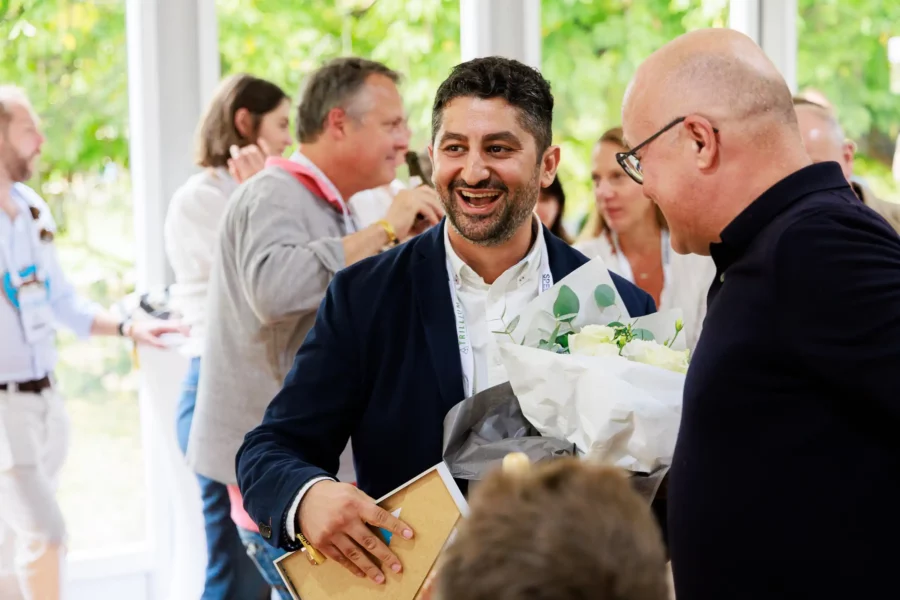
The Align Technology Research Award is presented annually to the best scientific projects in the field of aligner research worldwide—along with a research grant of $25,000 each, which goes directly toward the recipients’ ongoing scientific work. This means that in 2026, I will be among the select group of internationally recognized aligner researchers for the second time.
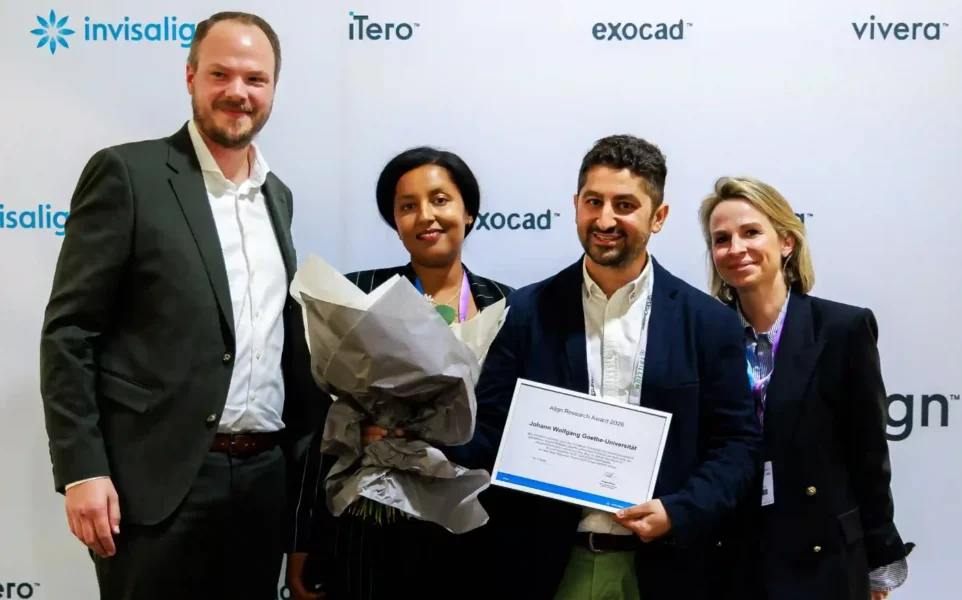
This continuity is no coincidence: I have been conducting in-depth research on aligner materials and the biomechanics of tooth movement for years, and I have supervised several doctoral students on these topics.
“It’s important to me that scientific findings are incorporated into our treatment and that we always stay up to date with the latest research.”
— PD Dr. Babak Sayahpour, aligner expert at Skyline Orthodontics
Your Orthodontist in Frankfurt for Invisalign and Aligners
From the Habilitation to Everyday Clinical Practice
The habilitation is the highest academic qualification following a doctorate (the award of a doctoral degree) and is regarded as proof of exceptional scholarly expertise as well as the ability to conduct independent research and teach at the university level. As part of my habilitation, I have published numerous scholarly articles and also authored a habilitation thesis on the properties of aligner materials.
I completed my habilitation at Goethe University in Frankfurt am Main, where, upon its successful completion, I was granted the right to teach (venia legendi) in the field of dentistry, oral and maxillofacial medicine. Only a handful of researchers in Germany have completed their habilitation in the field of aligner material properties. This in-depth scientific expertise is directly incorporated into our daily practice and enables evidence-based treatment that reflects the latest scientific advancements. In addition, I regularly share my knowledge as a speaker at national and international professional conferences and continuing education events.
My current project, funded in 2026, examines aspects of biomechanics related to aligner treatment—an area that is becoming increasingly important for the precision and predictability of tooth movement. This commitment is complemented by additional specialized training, which is not always standard in orthodontics.
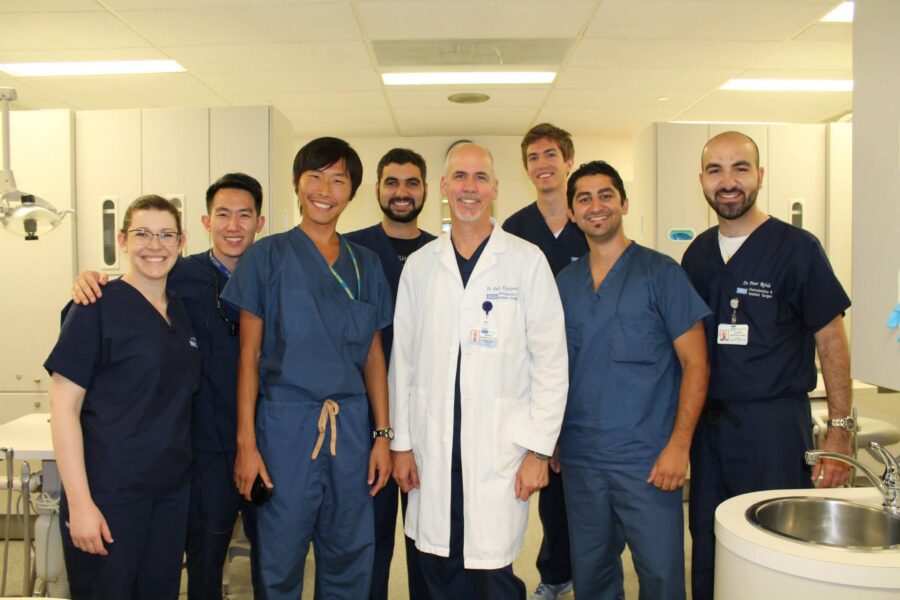
On the recommendation of my doctoral advisor at the time, Prof. Wehrbein, I pursued additional training in periodontology—the study of the periodontium—including at the renowned University of California, Los Angeles (UCLA). There, I was trained by, among others, Prof. Henry H. Takei, Distinguished Clinical Professor at the UCLA School of Dentistry and an internationally recognized expert in periodontology.
For many years, Prof. Takei ran a renowned private practice in the exclusive Bel Air neighborhood of Los Angeles—an area known worldwide for its many Hollywood stars and public figures. In addition, I was trained by Prof. Perry R. Klokkevold, then director of the UCLA Program in Periodontology. I also regularly completed clinical rotations at the periodontology practice of Dr. Todd Yamada in Los Angeles, who also serves as a faculty member at UCLA.
My commitment has always been—and remains—to excellence in orthodontics. Anyone who wants to do more than just move teeth—but rather provide long-term, healthy, safe, and stable treatment—must also understand the biological processes of the periodontium in great detail. It is precisely this in-depth knowledge of the gums, bone, and the biological principles of tooth movement that continues to inform every treatment plan at Skyline Orthodontics Frankfurt to this day.
This allows our patients to benefit from scientifically sound, exceptionally gentle, and precise treatment with aligners and braces—at the cutting edge of modern orthodontics in Frankfurt am Main. Before completing my specialty training in orthodontics, I also worked as a general dentist for about five years and received additional training in implantology from the International Team for Implantology (ITI) in London, among other places—a background that continues to help me understand the broader context of dentistry as a whole.
Why Skyline relies on multiple aligner systems, not just Invisalign
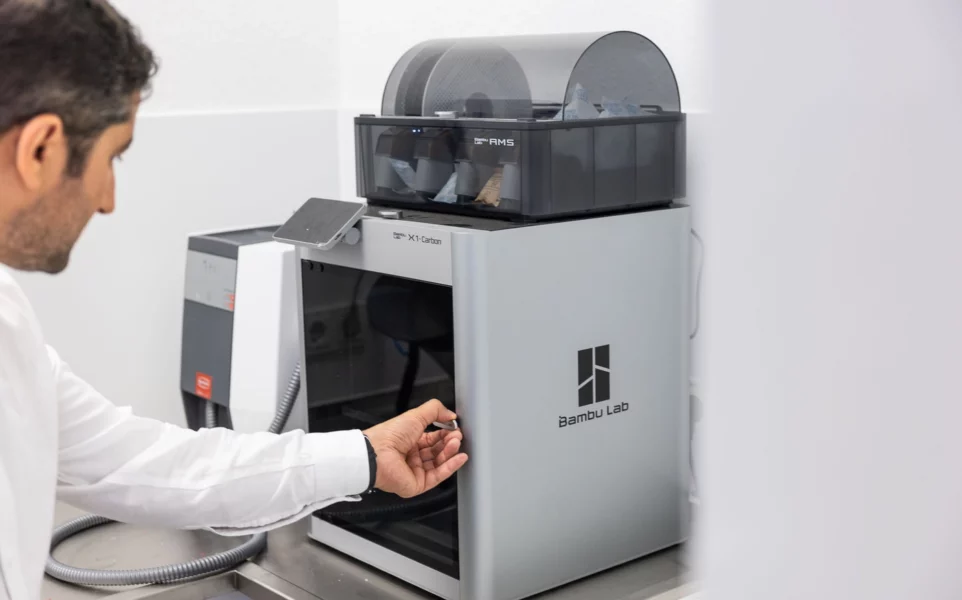
In addition to Invisalign, the best-known product from Align Technology, other providers such as Angel Aligner, Spark Aligner from Ormco, and the Korean company Graphy have established themselves on the market. When we manufacture some of the aligners ourselves in our own 3D printing lab, we use OnyxCeph software for planning.
For me, it’s not the aligner itself that matters, but the careful planning behind it—I start by working with my patients to define their individual treatment goals. An experienced orthodontist in Frankfurt selects the system based on what that goal requires—not on which brand is the best known.
“I don’t limit myself to a single aligner system; instead, I work with various aligner materials. It’s not the aligners that do the work—it’s the orthodontist who has a fundamental understanding of biomechanics and implements the treatment plan with precision.”
— PD Dr. Babak Sayahpour, aligner expert at Skyline Orthodontics
Five Criteria for Choosing a Good Dental Practice in Frankfurt
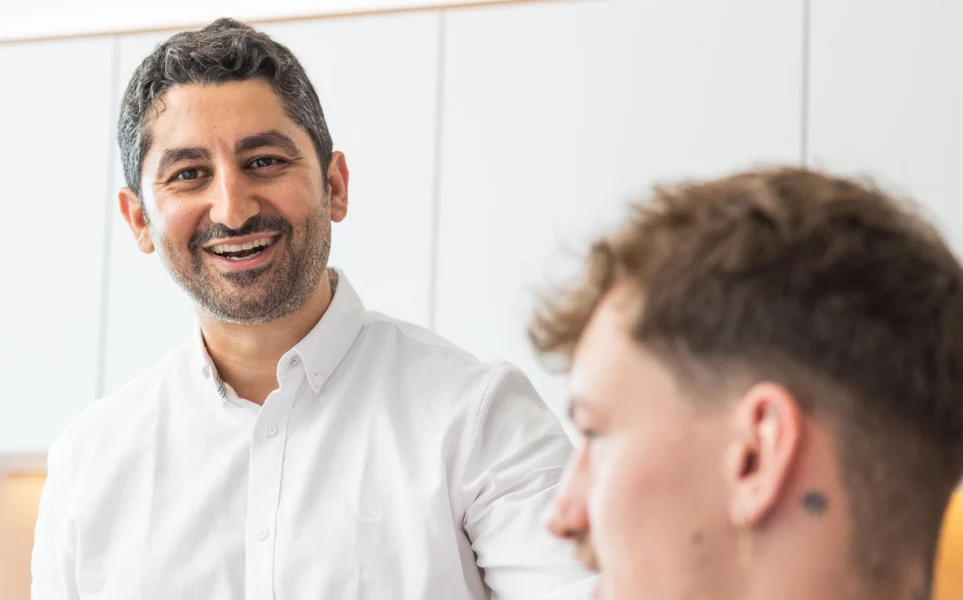
Not every orthodontist in Frankfurt who offers aligners holds the same standards—this applies to patients from the Europaviertel as well as to everyone who comes to us from Bornheim, Ostend, or Seckbach.
Precisely because materials and systems are evolving so rapidly, it’s worth taking a closer look: How is treatment planned, how carefully is the material selected, and what actually happens after treatment is completed? These points can help you navigate the process:
- Diagnostics – a comprehensive functional assessment that includes not only digital 3D scanning but also jaw movement and musculature
- Digital Planning – Simulation Makes It Possible to Visualize the Desired Treatment Outcome Even Before Treatment Begins
- Scientific Background – The latest research findings are continuously incorporated into treatment, not just once during training
- Variety of Materials – Choose from a range of aligner systems instead of limiting yourself to a single brand
- Retention and Follow-Up Care – A Clear Approach to Maintaining the Achieved Results Long-Term
Your Orthodontist in Frankfurt for Invisalign and Aligners
How I Combine Research and Treatment in the Europaviertel
At Skyline Orthodontics in Frankfurt’s Europaviertel, right next to Skyline Plaza and near the Frankfurt Trade Fair, I combine scientific research with daily clinical practice. You can find all the details about the treatment process, eligibility, and the options available with Invisalign on our aligner services page.
Schedule your personal Invisalign consultation in Frankfurt today
Straight teeth without visible braces—that’s what many adults want, often without knowing what options Invisalign offers today. At Skyline Orthodontics in the Europaviertel, we’ll determine during a personal consultation whether and how aligner therapy is right for your dental situation. You can also find all further details about the treatment process on our aligner services page.
Whether you live right next to Skyline Plaza or are coming from Bornheim, Ostend, Seckbach, Riederwald, Fechenheim, or Bergen-Enkheim, you can easily reach our practice at Europa-Allee 54 thanks to the Frankfurt (Main) Messe S-Bahn station and several bus and streetcar lines.
Call us at 069 48002777 or use our online form to schedule an appointment. We look forward to seeing you at our modern orthodontic practice near the Frankfurt Trade Fair.
About the Author
PD Dr. Babak Sayahpour
Orthodontist at Skyline Orthodontics | Specialist in Aligner Therapy & Research
PD Dr. Babak Sayahpour is a specialist in orthodontics at Skyline Orthodontics in Frankfurt’s Europaviertel. He wrote his habilitation thesis on the properties of aligner materials—one of the few works on this topic in German orthodontics. For his research, he was honored with the internationally renowned Align Technology Research Award in 2023 and again in 2026. In addition to his orthodontic training, he completed additional training in periodontology at UCLA in California. He regularly shares his expertise through national and international presentations.
Frequently Asked Questions About Invisalign in Frankfurt
-
Top Dentist 2027 in Frankfurt, Thanks to Your Reviews
Skyline Orthodontics is a TOP Dentist for 2027. The F.A.Z. Institute evaluated approximately 55,000 dental practices in Germany for this distinction, and no more than 2,000 received the award. We are among them, a good two years after opening our practice in Frankfurt’s Europaviertel. The list was published on October 14, 2026, in the F.A.Z. and online. It is based primarily on…
-
When Should a Child Get Braces? 7 Myths That Parents in Frankfurt Still Believe
Many parents often find themselves suddenly wondering when it makes sense to get braces. It usually starts with something small: the first permanent incisors are slightly crooked, a tooth is pushing its way into the second row, or the dentist casually mentions the bite during a checkup. Shortly after, the well-meaning advice starts coming in. At the playground, people say,…
-
The 7 Biggest Mistakes in Treating Jaw Pain
Jaw pain is one of the most commonly misdiagnosed conditions. Many adults who come to our practice in the Europaviertel district of Frankfurt am Main with pain in their temporomandibular joint have a long history of treatment behind them: appointments with dentists, ear, nose, and throat specialists, neurologists, and physical therapists. Often, they have several mouthguards sitting in a drawer that haven’t made a difference or…
-
Skyline Orthodontics Honored Once Again for Invisalign Research
For me, orthodontic treatment with aligners—especially Invisalign aligners—is more than just part of my daily practice; it’s also one of my main areas of research. My name is Privatdozent (PD) Dr. Babak Sayahpour; I’m an orthodontist in Frankfurt am Main and treat patients at Skyline Orthodontics in the Europaviertel. I’m all the more pleased that in 2026, for the second time, after…